Episode Transcript
[00:00:03] Speaker A: On the backdrop of an increasingly unstable nation world geopolitical tension. You only have to look at the
[00:00:15] Speaker B: news this morning to see that.
[00:00:17] Speaker A: And what's taking place in the Middle east with economic uncertainty, confusion, fraction and uncertainty reigns, you can reason that there's rarely been in recent history a greater need for faith, resilience and hope.
Can I ask you a question?
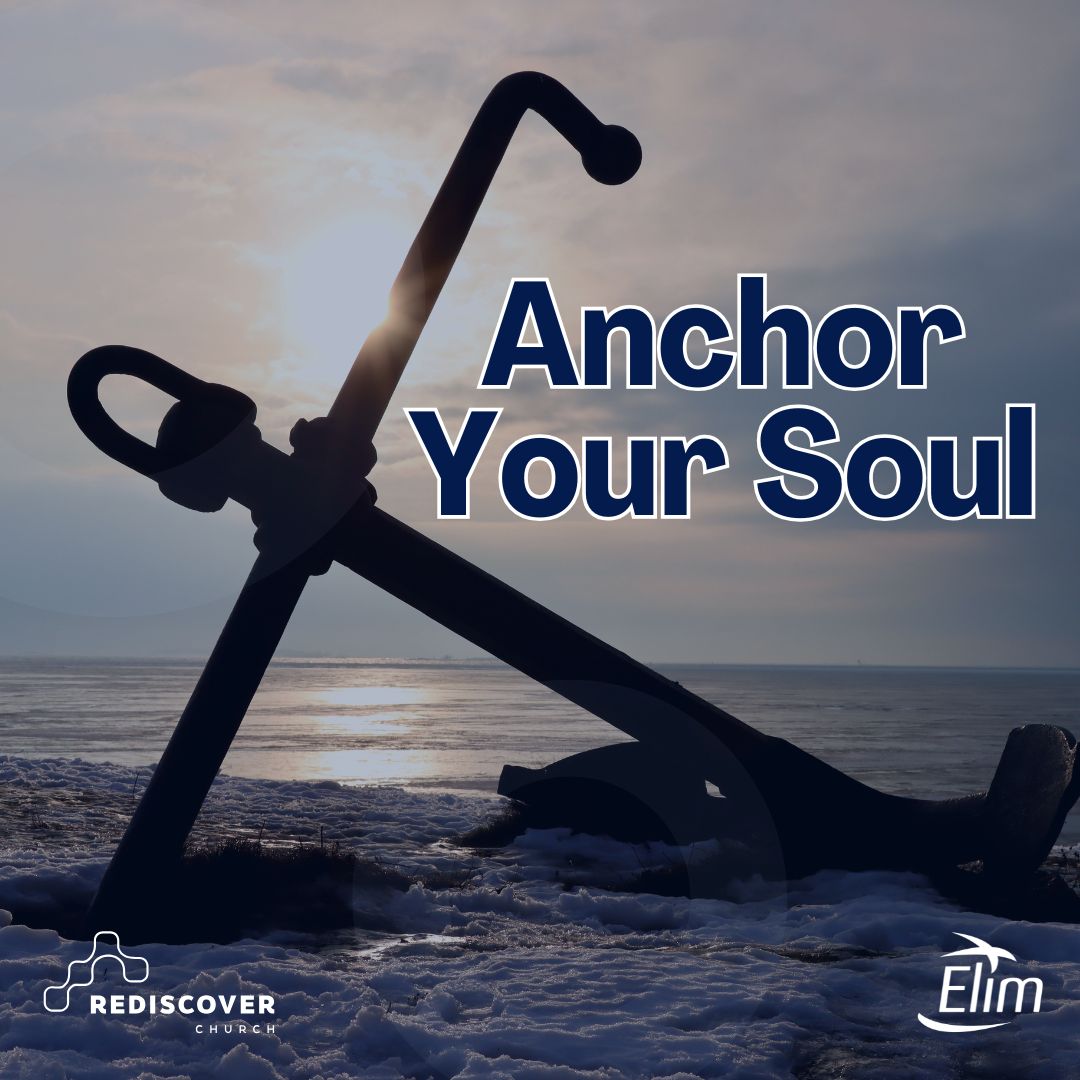
[00:00:37] Speaker B: Today, in the midst of all of that, what anchors you?
[00:00:46] Speaker A: There is resurgence in the military. I have a privilege of being a padre to the Royal Marines. And there's a resurgence of the concept of spiritual resilience.
We as people, as a church, we need to be resilient too. They're preparing these soldiers for what may lay ahead and recognizing they need a deeper, broader, stronger, rooted soldier for what may come ahead.
We need to be deeper, we need
[00:01:17] Speaker B: to be more heavily rooted.
[00:01:20] Speaker A: And the concept of spiritual resilience from a secular perspective is recognized or defined as the ability to withstand, recover and grow from stresses, adversity or change using resources that aren't merely material or physical or psychological, but in fact invisible.
Namely, a sense of belonging to something larger than self, deep levels of meaning, moral values and a connectedness to. To something else, to something other.
From a Christian perspective, you could say spiritual resilience is the spirit empowered capacity to remain faithful, hopeful and obedient to God in the midst of suffering, confusion, opposition, delay or loss, anchored not in circumstances, but in the unchanging character and promises of our living God.
I don't know about you, but I
[00:02:28] Speaker B: want a heavy dose of spiritual resilience. This morning.
[00:02:33] Speaker A: When we talk about the concept of spiritual resilience, we talk about three distinct pillars. I will touch on each one of them.
The first pillar is meaning and purpose. Purpose, what am I here to do? Meaning. Why does it matter?
A lot of the foundational work from a psychologist perspective was done in this area by a gentleman by the name of Viktor Frankl.
He was in the prisoner of war camps during the Second World War. He famously wrote the book Man's Search for Meaning.
[00:03:05] Speaker B: And with his academic vigor in Auschwitz
[00:03:09] Speaker A: particularly, he saw something and observed something at the depravity of mankind in the harshest of conditions, life or death situations and the brutality of those camps. He saw that many personnel did not
[00:03:26] Speaker B: die through lack of food or through lack of medicine, but through lack of meaning.
[00:03:35] Speaker A: You see, beyond the lack of food and medicine, they needed something more. And those who just survived did.
He said, interestingly, that those that did remain strong could access something.
[00:03:52] Speaker B: He saw they could access an inner hold or used Interchangeably, a spiritual hold.
[00:04:00] Speaker A: They could root themselves into something deeper that sustained them. Their circumstance didn't change, but they were rooted to something internally.
[00:04:12] Speaker B: And he said they always had the
[00:04:13] Speaker A: power of choice of how to respond.
[00:04:19] Speaker B: Step in our exampler the author of
[00:04:23] Speaker A: resilience Jesus in the Gospels is in the garden of Gethsemane.
[00:04:27] Speaker B: We know it well.
[00:04:29] Speaker A: He's about to come under arrest and go to the cross for the most excruciating execution.
[00:04:36] Speaker B: An innocent man.
[00:04:38] Speaker A: And in his humanity, in the aspect of his humanity, on his knees, sweating blood, he said, father, if it be possible, take this cup away from me. Nevertheless, not my will, but your will be done.
Frankl, copying Friedrich Nietzsche, said, if you give a man a why, he will overcome any how we capture Christ's why in this moment. In Hebrews 12:2 he said, for the joy set before him, Jesus endured the cross. The joy that was set before him made him endure that suffering that gave him resilience in that moment, inspired by love. And his sense of joy was for redeemed future that would come through him, for the restoration of his sons and daughters. For you and for I, for the glory beyond the cross and for all of eternity.
For the joy of what was to
[00:05:46] Speaker B: come, he endured the cross that was his why.
Can I ask you again today?
What's your why, what you do?
[00:05:58] Speaker A: The second pillar of spiritual resilience is moral values. And again on the backdrop of a morally troubled Britain, in steps a man by the name of John Wesley. In the mid-1700s, Wesley's heart was strangely warmed at Aldersgate and he became a much needed pillar of light and fire to Britain in a dark time.
He was invited into the fields to preach
[00:06:30] Speaker B: by a George Whitfield.
[00:06:33] Speaker A: And that wasn't his tradition in the day. He was an Anglican minister, but you don't go into dirty fields. But nonetheless, he refused and refused until he finally accepted and went into that muddy field and he preached the gospel.
That was a divining moment for Christendom and for our nation, because that John Wesley was set ablaze. When his heart was strangely warmed, he took a hold of the gospel and it said he went on horseback up and down our nation, preaching in the fields, preaching in the coal mines, preaching where any gathered people were. And for it it is said that he influenced a quarter of our nation. Vill communities were transformed, so much so that the whole character and fabric of the nation was being renewed.
Many historians believe that a French revolution in Britain was averted because of this change of heart and a moral Uprising and a sense of being rooted to Jesus Christ and the Gospel.
The sparks of Wesley would leap into future generations and begin to transform communities.
They would begin to transform workplaces. They would begin to transform horrible practices.
For example, the sparks leapt forward and the last letter Wesley ever wrote was to a gentleman by the name of William Wilberforce.
We know very, very well he went about abolishing the slave trade.
William Wilberforce was a powerful voice and drive behind the abolition of the slave trade. A gentleman by the name of John Newton. You'll know him for writing the famous hymn Amazing Grace. Who was a slave trader himself. But off the coast of Ireland when his ship was sinking, he came alive
[00:08:47] Speaker B: to God and reached out to him.
[00:08:49] Speaker A: In that moment he encouraged Wesley wrong Wilberforce not to give up his position in politics where he could be of an influence because he was considering of going into ministry. He said, use your position, use your gifting. Stay in the race to bring about change in our nation and the abhorrence of the slave trade.
The sparks of Wesley reached out and touched a man by the name of Lord Shaftesbury. Lord Shaftesbury was positioned on a trajectory for great wealth and opportunity in the higher echelons of society. But his heart was full of God. And what he saw on the backdrop of the Industrial Revolution and the atrocities that were taking place there in the factories with workers rights and the like, children as young as five being made to work 15 to 18 hour days. It was excruciating power. And pennies had taken precedent over people and their moral state.
On the backdrop of those dark and satanic mills in the fog of Britain. A Lord Shaftesbury petitioned and he pushed through for the Factory Act.
A legacy that we live in today
[00:10:13] Speaker B: that gives us protection against power in our workplace.
[00:10:19] Speaker A: The flames of Wesley then would reach out into a William Booth.
He brought about welfare reform in the east of London there through an organized welfare system which again we benefit from today.
[00:10:36] Speaker B: The motto of the Salvation army is blood and fire.
And the Salvation army that has touched
[00:10:45] Speaker A: millions of people, one of the largest charities in the world that is still feeding thousands, that is offering shelter and
[00:10:53] Speaker B: dignity to millions, still marches on today under the spirit of its general to the hymn of Onward Christian Soldiers.
[00:11:05] Speaker A: The sparks flew out from Wesley into a man called George Muller. And he cared for orphanages. He built orphanages on the backdrop of Charles Dickens and the famous line, please sir, can I have some more.
He built orphanages to care for these poor children who were given no dignity, no sense of freedom and Future and opportunity. He built over 10,000, thousand wrong. He built hundreds of orphanages, but he, it said, cared for over 10,000 orphans.
He brought about education and he touched over 120,000 people to give them the opportunity of education.
[00:11:53] Speaker B: Free education has not always been a gift, but because our great reformers, the
[00:11:59] Speaker A: inception of our Sunday schools and people like George Miller, we have the gift
[00:12:04] Speaker B: today of free education.
[00:12:07] Speaker A: The sparks of Wesley reached out to a lady called Elizabeth Fry, who brought about prison reform. Yes, these people have done wrong, but they are created in the image and likeness of God. Give them some dignity.
Our prisons and our people, and we're grateful for prison chaplains have the opportunity today to speak into a second chance
[00:12:32] Speaker B: for those people's lives and give them dignity and opportunity.
[00:12:36] Speaker A: The hearts of Wesley would leap forward and influence people like Arthur Guinness. Yes, the founder of Guinness, the Guinness Factory, and as a pioneer in his day, he brought about working conditions. He transformed the workplace. He bought in health care for all holidays, paid holidays.
Thank Arthur for paid holidays. He bought about pensions, he bought about bonuses. He brought about childcare in the workplace. He brought about doctors, he brought about sick pay. If you didn't work back then, you didn't get paid. But he bought about sick pay and wait for it. This is most incredible.
He allowed his staff to have free.
Two free pints of Guinness a day.
That is revival right there.
Hallelujah.
Oh, thank you.
[00:13:35] Speaker B: But we know the undercurrent, the energy, the fire, the conviction, the handrail for these reformers of which we live in the fruits of today was undoubtedly birthed. And we read in their journals and
[00:13:52] Speaker A: we read from their books, from the
[00:13:54] Speaker B: Ten Commandments and the greatest sermon ever told, the Beatitudes, that was their blueprint for moral reform. That's what drove them.
[00:14:05] Speaker A: It was Christ that anchored him. It was his heart that filled their hearts. It was that which set them ablaze
[00:14:13] Speaker B: and went in a burning inferno to transform societies and transform on nation
[00:14:22] Speaker A: the kingdom.
[00:14:25] Speaker B: Moral values are the moral DNA of the kingdom.
Moral values are the interior architecture of a resilient soul.
I want to remind you today you are carriers of of his presence.
You are moral agents. The Church is a moral agent. Britain traditionally is a moral agent to the world for its Christian values and has influenced it like no other.
[00:15:04] Speaker A: Christianity has the ultimate framework for people
[00:15:08] Speaker B: and a nation to flourish.
The framework for life, liberty and the pursuit of happiness.
If meaning and purpose is the first
[00:15:20] Speaker A: pillar and moral values is the second,
[00:15:22] Speaker B: then a connectedness to the other is our third.
And there are many Connectedness to the other.
There's comradeship, the esprit de corps. We see that in the military. And my experience formerly being a soldier before I became a minister is that
[00:15:40] Speaker A: on the battlefield, in the toughest of times, outside of believing in God and having a faith, comradeship, the esprit de
[00:15:49] Speaker B: corps, spirit of the body, the unity of a gathered people fighting for one another, is the second biggest factor that soldiers will fight.
The second is family.
And you'll know a name, G.K. chesterton, a great apologist and a writer during the First World War, or observe something special that a true soldier doesn't fight because he hates what is in front of him, but he loves what is behind him.
You and I, family, comradeship, community, church, society, are all connections to something bigger than ourselves. And I'm sure, like me, you were almost disappointed when you watched the movie Dan Kirk, because they seem to miss
[00:16:39] Speaker A: out a very important piece of history.
When King George VI and Winston Churchill, when the wolf was at the door at Dunkirk, threatening to invade Britain, our interests and our values called our nation to a national day of prayer. The church bells rang out across the Commonwealth and Britain and people flooded to the churches to reach up to the living God and ask for mercy and ask for his strength and his support. It inspired the famous speech by Winston Churchill where he'd go on and say, we will fight them in the streets. We will fight them in the. We will.
[00:17:19] Speaker B: We will never be conquered.
The spirit of Dunkirk was coined, but most importantly for you and I today, the ultimate connection to the other, the
[00:17:32] Speaker A: ultimate connection to something outside of ourselves,
[00:17:37] Speaker B: is the living God. It's the word of God. It's the Holy Spirit.
There's an old fable by a great philosopher by the name of Socrates, and
[00:17:51] Speaker A: there's an old story where a young man approaches Socrates and says, socrates, what is the secret to success?
[00:18:02] Speaker B: Socrates responds and says, young man, words to that effect.
[00:18:06] Speaker A: Tomorrow morning, come and meet me by
[00:18:09] Speaker B: the river and I will reveal to you what the secret of success is.
Dutifully, the young man was there.
[00:18:18] Speaker A: Right place, right time, right kit, right attitude.
[00:18:22] Speaker B: As we teach our soldiers, he says, follow me.
And he walks him into a river, and he walks him into the river, and he walks him into the river
[00:18:35] Speaker A: until the point that I imagine it
[00:18:37] Speaker B: was about six foot deep, probably the
[00:18:39] Speaker A: size of the tank, which is a
[00:18:40] Speaker B: cold pool of water where the soldiers
[00:18:43] Speaker A: get thrown into when maybe they haven't
[00:18:46] Speaker B: done things as well as they should.
It's the place where we now baptize our soldiers, too.
I Imagine it being about this high.
And at that point Socrates takes his legs out from underneath him.
This isn't recommended.
He holds him down and he holds him and he holds him and he
[00:19:14] Speaker A: holds him until I imagine his lips
[00:19:16] Speaker B: are starting to turn blue.
And then he lifts him up and no doubt the young man gasps after
[00:19:25] Speaker A: he gathers his composure.
[00:19:28] Speaker B: Socrates says to him, what did you desire the most when you were under that water?
And he said, air to breathe.
And he says, there lies the secret to success, young man. Until you desire what you want to
[00:19:47] Speaker A: achieve as much as you desired air and to breathe in that moment, you
[00:19:52] Speaker B: will never achieve it.
We know in a well schooled church here that that root word breathe or
[00:20:00] Speaker A: breath has its roots in the word react, spirit, wind, vital power. And also in the Latin breath, spiritus,
[00:20:13] Speaker B: breath, courage, vigor, soul, life force.
And I pray today, church that Christ the Holy Spirit, the breath of God, will fill your hearts and be closer than your very own breath.
And you will have the spiritus, the courage, vigor, soul and life force in what God has placed in your heart and where he has placed you uniquely to be the moral and transformational agents for the glory of his name and the good of our communities and nations.
Rediscover.
Take a deep breath and may his spirit fill your souls.
Can I remind you today as believers that we have.
You have the ultimate anchor.
It's rooted in something far greater than self. An anchor that inspires, holds and sustains.
An anchor to the author and finisher of our faith. An anchor to the creator of the heavens and the earth.
I shared with you at the beginning a story of young soldier on a high level operation.
And after he returned back and was recalibrating from the rigors of the battlefield, he found himself in the place he loved to be the most.
In the quietness of his home as a young believer trying to grow in the word of God, the word that is living and powerful. Sharper than any double edged sword that comes to cut and divide unto spirit and soul, unto joint and to marrow, the word that is living alive in our hearts today.
And it just so happened that his reading that day was in the book of Hebrews.
He'd never seen it before, but he read the words.
You have the hope as an anchor of your soul.
The word came alive to him with joy when he realized it was the living God speaking to the fabric of his being in the most harshest of times and a sense that I am with you, I will never leave you nor forsake you.
I want to exhort you today, anchor your soul.
You are anchored, you are resilient.
May I ask you all to stand.
And just clear the tables of your mind for a moment and steady your hearts.
And I would just like to share a short prayer and minister into your heart.
Heavenly Father, I thank you for every soul under the sound of my voice and all those watching online today.
I thank you that we truly have the word of God, which is living, which is powerful, which is spirit, which is life.
And I pray, breath of heaven, a fresh breath of heaven will be poured out across this church, poured out across our communities.
May we be inspired by our reformers.
May we be inspired by those who have gone before us, who have transformed their worlds.
May be inspired by the example ultimately of the living God, his son, Jesus Christ, in him, doing his Father's will, enduring the cross for the joy that was set before him.
The joy of the Lord is our strength today.
And I do pray that you're rekindling and stirring afresh hearts that you're fanning into flames the gift of God in each and every soul here today, Lord, that they may be transformational agents, that they may be kindling and burst of flames for the glory of your name, wherever you have uniquely gifted them and called them to be.
And I pray for a fresh breath of your holy Spirit through this place, through its vision, and through the mission and hearts of all the souls here today.
May your kingdom come. May your will be done.
We have the ultimate anchor.
It's rooted in something far greater than oneself.
An anchor that inspires, holds and sustains. An anchor to the author and finisher of our faith.
An anchor to the creator of the heavens and earth, for which, Lord, we are eternally grateful.
An anchor that holds into all of eternity.
Give us the strength to hold a tight to it, Lord, in all of our endeavours and in all of our dreams.
In Jesus mighty name we ask and pray.
Amen and Amen.